week 1 : Identifying the Challenges
me and my team were instructed to develop and implement a six week lifestyle intervention program for a client of our choice to change there life. planning ahead is crucial to our work as it can make outstanding difference in projects of this sort. fundamental aspects however should be investigated prior to planning.
What is the Big Question?
The intervention program should be aimed at changing a life, focused particularly on one of Health’s subcategories. considering the client’s request and physic, our team decided to focus on his fitness and exercise habits. our goal is to make a long term change to his approach to sports and exercise habits. but how are we going to approach this task? considering the client’s relationship with exercise, pushing him too far could reduce his enthusiasm for sports even more. he does however, have some motivation that can help him to overcome the obstacles. we can also use his motivation at times to lower his resistance towards exercise. we also have to do research on his anatomy and provide him with a variety of exercises and sports to choose from. this will increase the chance of finding sports that engage him. we are looking for a long term change to the client’s approach and perspective towards physical exercise.
week 2 : The Client
our client has some key features and acknowledging them will contribute considerably to the program’s efficiency. the client:
- doesn’t have a good relationship with exercise
- is motivated to become fit and masculine
- has a short attention span / gets bored easily
- likes mind puzzles, difficult video games and mathematical problems ( likes individual difficult activities which involve thinking and problem solving)
- gets easily overwhelmed / likes quiet and relaxing environments
- has wide shoulders and strong bone structure
- low muscle mass and a lack of workout experience (unknown muscle metabolism)
- high fat metabolism
- imperfect posture due to weak back muscles
it’s important to make sure our client is mentally and physically capable of following the program, throughout and after the intervention. it’s also very important to make sure the program is effective enough to achieve his long term goals.
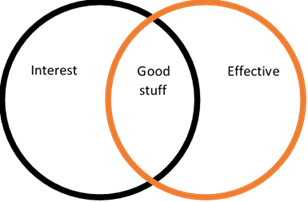
there are lots of factors to account for. we have divided these factors into two groups :
1. demonstrates the factors that affect the likelihood that our client will enjoy doing a sport
2. shows which one of those sports will contribute to his long term goals.
the sports that satisfy both of the criteria will be chosen to be examined. by simplifying and analysing these factors, we can understand how can they affect the outcome of our work.
-interest
the following three factors take place in this sub-group: 1- short attention span 2-
easily overwhelmed 3-likes thinking and problem solving, sports that provide a quiet and personal environment and require thinking such as chess, E-sports and rock climbing satisfy this criterion.
-effectiveness
we have to make sure the program contains exercises that provide equal and balanced muscle growth. gym, swimming and rock climbing are some examples of balanced exercises. sometimes combining unbalanced exercises can have balanced effects. for example, soccer, push ups, pull ups, sit ups and barfix is a balanced exercise.
week 3&4 :gathering the information
now we can start planning for the intervention program. in order to plan a good intervention program essential steps most be taken.
defining the inquiry question
the inquiry questions are driven from the big question “how will we change a life?”. these questions will further divide into sub questions which can help answer the inquiry question. the inquiry question we’ve chosen is “how can improving one’s physical habits improve other aspects of their life?” this question is further broken down into the following questions:
- how much can our intervention improve our clients performance?
- how does the intervention affect our client’s view towards sports and exercises?
- does exercise help our client in any other aria?
security
we have to make sure our program provide a safe and secure experience for our client both mentally and physically. this can be achieved through thoughtful planing and professional assistance.
limits
we are limited by:
- the intervention deadline
- client contact(limited number of sessions due to our and clients contradicting schedule)
- our client’s commitment
our responsibilities
we have to make sure the intervention is suitable for our client and give him support throughout the intervention and provide a safe environment for him to make improvement without being ashamed of his current situation.
client’s responsibilities
our client has to fully commit to the intervention. he has to trust us and ask for our support if needed.
week 5 : create the intervention
-the intervention
our intervention contains two weekly activities:
we will introduce two sports one by one throughout the first two weeks. this will prevent our client from getting overwhelmed. we’ll start with a simple running exercise to estimate his current physical capacity. the next week, we’ll organise a swimming plan for him. we will introduce both sports to him by the second week. from that stage, its a matter of his commitment and our support.
recording and gathering data
we’ll provide a table to present a set of recorded data. we’ll also provide images and videos showing his improvements over time. in addition to that, we’ll ask questions from our client in relation to his thoughts on the intervention.
intervention week 1
the first week’s intervention was mainly focused on estimating our clients physical abilities. the activities were simple, and contained long breaks in between each trail. our future interventions however will be much more efficient. unfortunately our clients performance was influenced by the weather. the environment we used had unleveled and bumpy surface. although the environment wasn’t accurately measured, we estimated it to be around two hundred and fifty meters. our client did three trials which were recorded. unfortunately we lost the footage due to my partners unfortunate bike accident in which he ran over his phone. the records however were recorded on his book. the record for week 1 running intervention goes as following:
- T1. 2:29s
- T2. 1:49s
- T3. 1:30s
after each trial, the client had breathing difficulties. according to him ” i couldn’t even talk right, it was crazy. I don’t know how the next few weeks are gonna go, but i know they can’t be good”. he also mentioned” i think we should improve the location that we are using”. we will reflect on our clients suggestions on future sessions. we’ll change the location of our intervention to a leveled and accurately measured one.
intervention week 2
the second week was the first serious week of the intervention. we changed the bumpy and unleveled location of our intervention to the less bumpy and more leveled rugby filled. in addition to that we’ve saved the videos to a reliable storage unit (my phone). we asked our client to circle around the filled. the round of the filled we used was measured to be five hundred meter. considering we increased the distance in which our client had to walk, we didn’t made any limitations in how long the breaks between each trial took. despite not limiting his breaks, our client took very short breaks which affected his last run exponentially. have recorded a video of the intervention. the records for week 2 running intervention reads as following:
aside from the running program, we added the swimming program to our clients schedule. since we used a public pool, we didn’t filmed this intervention. the program starts with two laps of freestyle, followed by two laps breaststroke and finishes with two laps of back strook. every lap is 25m long. the client is told he should feel free to do more if he wants to. the records for week 2 swimming intervention are:
at the running program, our clients performance had improved exponentially. we didn’t get much feedback from him that day but latter he said that he got really tired that day but he felt much better the following days. for the swimming intervention however, he claimed to have felt tired until few days after the intervention.
intervention week 3
on the third week of our intervention, the rugby field we were planing to use was occupied. that week we used another filled which was exponentially bigger than the rugby field. our client however, ran half the distance which is steal bigger than the rugby field we used last week. he also ran slower than last time, keeping enough energy for the last trials. the records for week 3 running intervention reads as following:
- T1. 2:40s
- T2. 2:13s
- T3. 1:42s
the swimming program was similar to last week. the swimming pool was occupied (again) which prevented use from filming the intervention. the records for week 3 swimming intervention are:
- Fr.1:15s
- Br.1:37s
- Ba.2:10s
after the second swimming intervention we decided to find out about the times when the pool is not occupied so we can film the intervention at those times. the client noted “this weeks intervention was not like the other weeks, it was a really heavy program”
intervention week 4
for the 4th and 5th week we decided to change the running program. considering last weeks program, we reduced the number of trials to two and reduced the distance exponentially. the records for week 4 running intervention are both 0:19s
for the swimming program, we managed to find a time when the pool wasn’t occupied. this means we were able to film the intervention. we also decided to recorded each lap separately. the records for week 4 swimming intervention are:
- -Fr
- L1. 0:36s
- L2. 0:40s
- -Br
- L1. 0:38s
- L2. 0:41s
- -Ba
- L1. 0:49s
- L2. 0:49s
in a few instances our client experienced cramps on his calf. after the intervention he said it was a little better than last week. he didn’t look as tired as the other weeks which could be because of the changes we made to the program.
intervention week 5
this weeks intervention was just like last week(i mean leturalty). the records for week 5 intervention are 0:16s and 0:17s.
the records for week 5 swimming intervention are:
- -Fr
- L1. 0:34s
- L2. 0:38s
- -Br
- L1. 0:36s
- L2. 0:44s
- -Ba
- L1. 1:11s
- L2. 1:16s
the client claimed this week’s intervention to have been harder than last week’s(despite them being identical).
intervention week 6
for the running intervention, we asked our client to run around the same field as week 3 only once but we also asked him to do his best. at his last runnin intervention he finished the curse after 1 minute 20 seconds.
the records for week 6 swimming intervention are:
- -Fr
- L1. 0:34s
- L2. 0:36s
- -Br
- L1. 0:37s
- L2. 0:45s
- -Ba
- L1. 1:00s
- L2. 1:05s
According to our client “i’ve had some doubts at first, wither if the intervention could make much improvements in my lifestyle if any. i know that six weeks is not enough time to make major changes in my appearance but i hoped it would improve my relationships with sports and exercising in general. I still have my problems with exercising, it would be unfair however to say it hasn’t improved by a considerable factor.”
Reflection
1.How do I feel about the intervention
it was evident from the beginning that our intervention not much improvement could be in relation to our clients physique in our six week dead mark. after considering our clients mentality we decided to focus more on his attitude towards exercises. we tried to find environments in which he’d feel more comfortable, keep the programs entertaining and prevented overloading him with pressure. unfortunately there was times where something didn’t go as intended but overall i’m very happy with how everything went.
2.client feedback
according to our client the intervention was quit helpful in making him do more exercises on a repeating schedule. he said he wished the intervention could go for longer but six weeks was fortunately long enough to change his attitude towards sports. in addition he mentioned being in an environment where he was confident to be fairly judgment, helped him put his biases aside and find a positive attitude towards sports. he did however mentioned to be disappointed to lose the opportunity to perform at the rugby filled at times as it was acquired.
3.what would i do differently
the over all structure of the intervention was quite satisfying. however there were aspects that could be easily improved. the interventions could go for longer with less distance and more trials. in addition the programmes could consist of a bigr range of sports.
4.have i changed a life
considering our inquiry questions i would say yes. our client’s performance has improved by a considerable factor and we’ve managed to change his attitude towards sports and exercises. however now it depends on wither our client continues exercising or not. if he stops exersising than
 Michael's